Hi quest ,  welcome  |  sign in  |  registered now  |  need help ?
My blog is supported by your donations and your clicks on the ads If you like what I do and feel it useful ... support me! Many thanks
Showing posts with label Mobile phones. Show all posts

Nokia leads the way for 5G: Technology is 40 TIMES faster than 4G - and it's so powerful your phone can't handle it yet

Written By Unknown on Sunday, June 14, 2015 | 1:26 AM

  • The Nokia Networks system reaches speeds of up to 10Gbps 
  • Tech helps pave the way for 5G networks - the next level in mobile internet
  • By comparison, the theoretical maximum for 4G networks is 42Mbps
  • Such speeds mean full-length HD films could be downloaded in a second

Networks across the globe are still working on the roll out of 4G, but that hasn't stopped them trying to make our mobile internet even faster for the next-generation of devices.

At a summit in Boston, Nokia Networks has demonstrated a system that can deliver speeds of up to 10 Gigabits per second (Gbps).

This is 40 times faster than the current maximum speeds achievable on 4G and means full-length HD films could be downloaded in the blink of an eye.


+3

Nokia Networks has demonstrated a system that can deliver speeds of up to 10 Gigabits per second (Gbps). This is 40 times faster than the current maximum speeds achievable on 4G and means full-length HD films could be downloaded in the blink of an eye. And video calls could be made without any lag (stock image)

Such speeds could also pave the way for next-generation video and pictures on 8K - twice as clear as 4K and 16 times as clear as HD - as well as reduce the lag on video calls.

Nokia Networks teamed up with National Instruments (NI) to build what it's calling the fastest cellular technology ever tested. It sends data over a frequency of 73,000 MHz, or 73GHz.


Wavelengths in this band can be as small as millimetre, and are also known as millimetre wave or mmW and are currently used by radio astronomy, radars on aircraft and security scanners in airports, for example.

NOKIA'S SUPERFAST NETWORK


Nokia Networks teamed up with National Instruments (NI) to build what it's calling the fastest cellular technology ever tested.

It sends the data over a frequency of 73,000 MHz, also known as 73GHz.

Wavelengths in this band can be as small as millimetre, and it are also known as millimetre wave or mmW.

At a summit in Boston, Nokia Networks demonstrated its system can deliver speeds of up to 10 Gigabits per second (Gbps).

This is 40 times faster than the current maximum speeds achievable on 4G and means full-length HD films could be downloaded in the blink of an eye.

Such speeds could also pave the way for next-generation video and pictures including 8K which is twice as clear as 4K and 16 times as clear as HD.

By comparison, current mobile networks range between 700 MHz and 3,500 MHz, while the maximum theoretical speeds for 4G is 42Mbps.

The Nokia Networks system is 10 times faster than the current fastest fibre internet technology, including Google Fiber in the US.

It is also 25 per cent faster than similar technology demonstrated by Samsung earlier this year, which achieved peak speeds of 7.5Gbps.

While 4G networks speed up standard downloads to about 13 minutes, subscribers of these services would theoretically be able to download massive data files 'practically without limitation', said Samsung at the time.


This would lead to 'almost instantaneous access to games and 3D movies or the ability to stream ultra high-definition programmes in real-time'.

Although peak speeds are the maximum, and people would likely achieve slower speeds than this due to hardware or website restrictions, for instance.

This is a problem current mobile and broadband networks also experience.

Nokia demonstrated the technology at its annual Brooklyn 5G Summit, which this year was focused on using the spectrum above 6GHz.

The use of new spectrum bands is a key feature for future 5G networks because they could offer 'virtually zero' latency, or delay.

Latency on 4G is capable of between 40 and 60 milliseconds, which is low but is not immediate and doesn't provide a real-time response.


World's wireless industry meets to discuss 5G network (related)
Add caption


Add caption


+3

Nokia Networks's system sends the data over a frequency of 73GHz. Wavelengths in this band can be as small as millimetre, and it are also known as millimetre wave or mmW. By comparison, current networks (mast pictured) range between 700 MHz to 3,500 MHz, while the maximum theoretical speed for 4G is 42Mbps
Add caption


+3

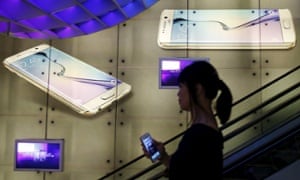
The Nokia Networks system is 10 times faster than the current fastest fibre internet technology, including Google Fiber in the US. It is also 25 per cent faster than similar technology demonstrated by Samsung earlier this year, which achieved peak speeds of 7.5Gbps. The Samsung S6 is pictured

Zero latency is key when playing games on a phone, for example, meaning the on-screen character responds immediately after the control is pressed.

WHAT IS 5G AND WHY IS IT IMPORTANT?


5G is the name given to the next generation of mobile networks. It will be the faster successor to the current 4G.

Nokia Networks has demonstrated speeds of up to 10Gbps, while Samsung recently achieved 7.5Gbps during tests.

These breakthroughs are key to the development of a 5G network, and run on high levels of the spectrum.

Wavelengths in this band can be as small as millimetre, and it is also known as millimetre wave or mmW. These can handle fast speeds and offer 'virtually zero latency'.

By comparison, current networks range between 700 MHz to 3,500 MHz, while the maximum theoretical speeds for 4G is 42Mbps and latency is between 40 and 60 milliseconds.

Such high-frequency wavebands have previously deemed unsuitable for mobile networks.

But they have a limited distance, are easily blocked by buildings and walls, and require specific transceivers capable of providing 5G to a wide area, via a phone mast.

Phones can't currently receive signals and wavelengths on such a high frequency, so new technology will need to be added to these devices.

5G networks also rely on a large number of new phone masts being installed for the higher, shorter, signals to travel over long distances.

It's also needed to handle the vast range of connected devices, in addition to mobiles, including cars, smart homes and augmented reality apps.

Such high-frequency wavebands have previously been deemed unsuitable for mobile networks.

They have a limited distance, are easily blocked by buildings and walls, and require specific transceivers capable of providing 5G to a wide area, via a phone mast.

Phones can't currently receive signals and wavelengths on such a high frequency, so new technology will need to be added to these devices.

5G networks also rely on a large number of new phone masts being installed for the higher, shorter, signals to travel over long distances.

And this has led to warnings from analysts that faster downloads could cause larger bills, and raised health fears that new high powered broadcasts will fuel so-called 'electronic smog'.


Lauri Oksanen, vice president of research and technology at Nokia Networks, said: 'At Nokia we strive to expand the human potential of the connected world.

'5G mobile network speeds as high as 10Gbps and with extremely low latency are a driving force for massive mobile broadband and totally new applications in the future.'

But despite the extra costs for infrastructure and technology 5G will add to businesses, it could also benefit the economy.

Denis Keseris, patent attorney at intellectual property firm Withers & Rogers, said: '5G will require some degree of global cooperation in order to design a standard capable of reliable communication.

'This is going to take time, but rather than waiting for the outcome, some innovators are already developing concepts and technology that may find their way into the 5G standard.


Such wavelengths are currently used by radio astronomy (pictured), radars on aircraft and security scanners in airports, for example. But they have previously been deemed unsuitable for mobile networks because they have a limited distance, are easily blocked by buildings, and require specific transceivers


Nokia Networks recently completed its first live testing of High Speed Cell FACH technology. When using apps, phones send and receive small amounts of data, and Nokia's technology is designed to handle these so-called 'data packets' more efficiently. This increases browsing speeds, power savings and response times

'Investing time and energy in speculative innovation is obviously a gamble, but the scale of the 5G opportunity could make it worthwhile.'

Nokia Networks is also leading the way in developing battery saving technology. Last year, it made a significant breakthrough by boosting battery life by up to 49 per cent.

WHAT IS HIGH SPEED CELL FACH?


The software is designed to help operators handle data sent over 3G networks.

When running applications such as WhatsApp, Facebook, and Twitter, as well as browsing the web, sending emails and using services such as FaceTime, phones often send and receive small amounts of data.

These are known as packets, and are typically just a few hundreds of bytes or a few kbytes.

High Speed Cell FACH is designed to handle these small data packets more efficiently than other software.

This makes apps run faster, and also means they use less energy over the course of a day, for example.

The technology also means operators can boost the speed and quality of their services, and support a higher number of phones on their networks.

More technical details can be found on Nokia's originalwhite paper.

The Finnish-based firm saw these results during its first live trial of a software known as High Speed Cell FACH on a 3G network.

When running applications such as WhatsApp, Facebook, and Twitter, as well as browsing the web, sending emails and using services such as FaceTime, phones often send and receive small amounts of data, known as packets, of just a few hundreds of bytes or a few kbytes.

High Speed Cell FACH is designed to handle these small data packets more efficiently than other software.

This makes apps run faster, and also means they use less energy over the course of a day.

The technology additionally means operators can boost the speed and quality of their services, and support a higher number of phones on their networks.

According to the recent Nokia tests, the 3G software boosts speeds and network response times by up to 65 per cent, and leads to up to 20 per cent faster browsing.

Users also saw power savings of up to 49 per cent, which meant their battery life lasted almost twice as long - depending on which applications were being used.

The lowest power saving was nine per cent.

The tests were run on the commercial 3G/HSPA network of a major European operator - although Nokia did not reveal which operator it was.

Testers also used devices fitted with Qualcomm Snapdragon processors that already support High Speed Cell FACH.


The tests were run on a commercial 3G/HSPA network using devices fitted with Qualcomm Snapdragon processors. Results revealed 50% power savings, when certain apps were used, 65% faster response times, and 21% faster browsing. Ping relates to networks sending signals to a web-enabled device

High Speed Cell FACH is a capability that Qualcomm Technologies already supports on its latest Snapdragon processors.

These processors are seen in high-end, flagship phones including the Nexus 6, Samsung Galaxy Note Edge and Note 4, and Amazon Fire HDX 8.9 (2014).

Nokia said the live network tests 'produced substantial performance gains that exceeded Qualcomm's expectations', including beating previous laboratory test results.

But it is not known when it will be widely available to networks and customers.


1:26 AM | 0 comments

Gameloft To Make Modern Combat 5 Free-To-Play In Next Update

Written By Unknown on Friday, June 12, 2015 | 6:42 PM

Modern Combat 5's release was hardly unexpected. After all, it's a sequel in one of the most popular franchises on Google Play. Nevertheless, it was a surprise to see the Gameloft title launch without a single in-app purchase in sight. In exchange, the publisher priced it at $7. Reasonable.

Ryan put the game through its paces, and while it wasn't without its caveats, it easily provided enough content to justify the price tag.


Now Gameloft is making the game free-to-play. The update is already available on iOS, and it's slated to hit Android soon.


This update makes Modern Combat 5 available for free to millions of new players, and adds controller support, more weapons, a new class and more. All of our current players are getting Veteran status, with unlimited energy, and some other goodies as a thank you for their support. Ultimately, the switch to free-to-play means the game will have a longer lifetime, so we can invest more in the long-term update plan and in the servers which need to support a significantly larger player base. One thing we’re not messing with is the competitive balance players have come to expect in Modern Combat.

— Valeriu Ispir, Product Manager

This means the publisher is doubling down on in-app purchases. People who have already bought the title will receive veteran status rewarding them with an exclusive kill sign and costume, unlimited energy for life, and 200 credits. Yup,energy and credits. Modern Combat 5 will now feature an energy meter that limits how many missions you can go on. Players can buy unlimited energy for a period of time.

It was fun while it lasted, right?

Gameloft already rolled IAPs into the experience months after Modern Combat 5 originally launched, but these weren't required. They gave you a way to buy content that you could otherwise unlock the old-fashioned way.


But hey, it's not all doom and gloom. The company is packing some new stuff into the update. There will be a new support soldier class that can heal and aid allies. There's also an additional weapon class (the light machine gun) and a 6th weapon tier. These are joined by a new multiplayer mode centered on capturing zones placed in certain areas of each map.


Right now the game is priced at $3.99, but you can look for that upfront cost to disappear once the update arrives. Hop on it now if you want to become a veteran before then.


Modern Combat 5: Blackout

418,532 ratings

Offers in-app purchases

by Gameloft
5,000,000 - 10,000,000 downloads

Appears in a list of Games for Gamers (HD)

QR Code
Install (FREE)

6:42 PM | 0 comments

Ice Age Avalanche promises puzzle game fun on Android

Fans of puzzle games like Candy Crush Saga might find something new to play with Gameloft's just-launched Ice Ag e Avalanche for Android.


Gameloft's newest Android game is Ice Age Avalanche. It's a free-to-play "match 3" puzzle game that's based on the popular animated movie series. 

The game features the movie's main characters like Sid, the constantly talking sloth, Manny, the "ordinary guy" mammoth, Diego, the wise-cracking sabretooth tiger, and Scrat, the squirrel who just love to collect nuts. Here's what players can expect:
5:20 PM | 0 comments

Huawei P8 - Full phone specifications

Written By Unknown on Thursday, June 11, 2015 | 5:20 AM


NETWORK

  Technology GSM / HSPA / LTE
2G bands GSM 850 / 900 / 1800 / 1900 - SIM 1 & SIM 2
3G bands HSDPA 850 / 900 / 1700 / 1900 / 2100 - UL00
HSDPA 800 / 850 / 900 / 1700 / 1800 / 1900 / 2100 - L09
4G bands LTE band 1(2100), 3(1800), 4(1700/2100), 7(2600), 38(2600), 39(1900), 40(2300), 41(2500) - UL00
LTE band 1(2100), 2(1900), 3(1800), 4(1700/2100), 5(850), 7(2600), 8(900), 12(700), 17(700), 18(800), 19(800), 20(800), 25(1900), 26(850), 28(700), 40(2300) - L09
Speed HSPA 42.2/5.76 Mbps, LTE Cat6 300/50 Mbps
GPRS Yes
EDGE Yes

LAUNCH

  Announced 2015, April
Status Available. Released 2015, April

BODY

  Dimensions 144.9 x 72.1 x 6.4 mm (5.70 x 2.84 x 0.25 in)
Weight 144 g (5.08 oz)
Build Corning Gorilla Glass 3 back panel
SIM Dual SIM (Nano-SIM, dual stand-by)

DISPLAY

  Type IPS LCD capacitive touchscreen, 16M colors
Size 5.2 inches (~71.4% screen-to-body ratio)
Resolution 1080 x 1920 pixels (~424 ppi pixel density)
Multitouch Yes
Protection Corning Gorilla Glass 3
- Emotion 3.1 UI

PLATFORM OSù

Android OS, v5.0.2 (Lollipop)
Chipset HiSilicon Kirin 930/935
CPU Quad-core 2 GHz Cortex-A53 & quad-core 1.5 GHz Cortex-A53
GPU Mali-T628 MP4

MEMORY

Card slot microSD, up to 128 GB (uses SIM 2 slot)
Internal 16/64 GB, 3 GB RAM

CAMERA

  Primary 13 MP, 4160 x 3120 pixels, autofocus, optical image stabilization, dual-LED (dual tone) flash
Features Geo-tagging, touch focus, face/smile detection, panorama, HDR
Video 1080p@30fps
Secondary 8 MP

SOUND

  Alert types Vibration; MP3, WAV ringtones
Loudspeaker Yes
3.5mm jack Yes

COMMS WLAN

Wi-Fi 802.11 a/b/g/n, Wi-Fi Direct, DLNA, hotspot
Bluetooth v4.1, A2DP, LE
GPS Yes, with A-GPS, GLONASS/ Beidou (market dependant)
NFC Yes
Radio To be confirmed
USB microUSB v2.0, USB Host

FEATURES

  Sensors Accelerometer, gyro, proximity, compass
Messaging SMS(threaded view), MMS, Email, Push Mail, IM
Browser HTML5
Java No
- Active noise cancellation with dedicated mic
- XviD/MP4/H.264 player
- MP3/eAAC+/WMA/WAV/Flac player
- Document viewer
- Photo/video editor

BATTERY

 Non-removable Li-Po 2680 mAh battery
Stand-by
Talk time

MISC Colors Titanium Grey, Mystic Champagne (16 GB model)
Carbon Black, Prestige Gold (64 GB model)
5:20 AM | 0 comments

Huawei P8 review

Key Features: 5.2-inch, 1080p Full HD display; 13-megapixel OIS-enhanced camera; Android 5.0 Lollipop; 2600mAh battery

Manufacturer: Huawei

What is the Huawei P8?

After testing the waters with its Ascend range, Huawei is hoping to make a more serious mark with the P8. Huawei lacks the recognition of a Samsung, Apple or even HTC, but it hopes to tempt potential suitors with the P8’s iPhone-like aluminum body and slick design, along with some promising specs.

It largely succeeds, too. The P8's octa-core processor, 3GB RAM and high quality camera show it means business, making it a very good option for anyone who isn’t wooed by big names and likes to carry something a little bit different. The fact it's much cheaper than direct rivals certainly helps, too.

Watch our Huawei P8 hands-on video below


Huawei P8 – Design

Metal body; 144.9 x 72.1 x 6.4mm; 144g

If someone put the Huawei P8 in your hand and asked you to guess the price, chances are you’d overestimate it. It’s beautifully crafted, taking obvious inspiration from the Apple iPhone 6 and Sony Xperia Z3, but with a more angular look and feel.

The Huawei P8 has some subtle touches of elegance that help differentiate it from the competition, including a smooth glass rectangle section on the back of the phone where the camera sits. We also like the fact that the front face of the phone is clean and branding free, with no home button or unsightly plastic-looking speaker grills – are you paying attention, Samsung?

Related: Huawei P8 vs P8 Max: What's the difference?


The chiselled curved edges of the P8 are similar to the Samsung Galaxy S5, while the softly textured metal back of the phone echoes that of the iPhone 5. Huawei hasn’t just taken design cues from its rivals though, it’s also followed the trend different colours with ridiculous names. As a result, the 16GB version P8 is available in Mystic Champagne/Titanium Grey, and a 64GB P8 is available in Prestige Gold and the less ludicrous Carbon Black. Colours may vary by territory, though.

The power button and volume keys on the right hand side of the P8 are the only physical keys on the P8, and they’re our only real gripe with this phone’s design. The power button is miniscule and is so close to the volume keys that it’s easy to to hit the wrong button.

Related: Huawei P8 vs P7: What's New?


A double tap of the bottom volume key opens the camera and takes a picture when the phone screen is off. It’s a good feature, but it would be easier if the power button was larger, further away or on the opposite side of the phone.

Yet this small weakness doesn’t detract from what’s otherwise a solid and well-built phone. It’s heavier than the iPhone 6 and Samsung Galaxy S6, but it’s lighter than the HTC One M9 and looks as good as any of them despite costing nearly half as much.

Related: Best Cheap Smartphones
Huawei P8 – Screen

5.2-inch; 1080 x 1920 pixels (Full HD); 424ppi; IPS LCD; Gorilla Glass 3

The 5.2-inch screen on the Huawei P8 is a touch larger than the one on the Galaxy S6, but the thin bezel means it doesn’t take up too much more space. And, while it isn’t Quad HD like the S6, it’s one of the finest Full HD screens we’ve seen in a phone. It’s big, it’s bright and it’s useable in all lighting conditions.

Huawei’s Emotion UI includes some options for adjusting the P8 screen’s colour temperature and we used it to counter the phone’s apparent natural bias towards warmer tones. The display options in settings offer a sliding scale between warm and cold, and we found that nudging the slider one position to the right gave us a more natural colour balance.


Related: Best Smartphones and Mobile Phones


That isn’t to say that this phone is particularly bad when it comes to colour reproduction, though. Overall, it does a good job of rendering colours vibrantly, but if you pay attention to Red and Magenta tones, it’s clear there is some oversaturation taking place.

Side-by-side with some of the other flagship phones, the P8 manages to hold its own. Next to the Galaxy S6, the P8 appears to deliver slightly punchier colours, but it can’t match it for detail, deep blacks or clean white tones. Held up next to the HTC One M9, the P8 edges its more expensive rival.


Related: Best Headphones

The P8’s screen looks good at acute viewing angles and adapts to changing light conditions well, too. This is one particular area where the P8 really impresses, though it’s by no means the only area – it’s a great screen all round.
5:07 AM | 0 comments

Samsung back on top as world’s biggest smartphone manufacturer

Written By Unknown on Wednesday, June 10, 2015 | 5:09 PM

Samsung’s battle with Apple and its iPhone has eaten into its mobile profits, even as smartphone sales recover


 Samsung has reclaimed the top spot in global smartphone sales, beating Apple and Lenovo, despite its profits slipping 39%.


Samsung sold 83.2m smartphones globally in the first quarter of 2015, according to data from research firm Strategy Analytics, reclaiming the top spot from Apple which sold 61.2m iPhones in the same period. In total, 345m smartphones were sold globally.


Both Samsung and Apple have a healthy margin over the third biggest smartphone manufacturer Lenovo-Motorola, which sold 18.8m smartphones, and fourth placed Huawei, which sold 17.3m.


Samsung’s sale figures come as it announced a slump in its smartphone profits, which generated 2.74 trillion won (£1.6bn) in quarterly profit down 58% compared with 6.43 trillion won a year earlier.


The underperforming mobile division dragged the company’s net profit down to 4.63 trillion won, compared with 7.49 trillion won a year earlier.
iPhone impact


Apple’s launch of the iPhone 6 and iPhone 6 Plus, which are both larger than the 4in iPhone 5S from 2013, ate into Samsung’s high-end smartphone sales. Those seeking larger smartphones finally had an iPhone option; until that point, large screens in excess of 5in were a feature that set Samsung apart.


Data from Counterpoint Technology Market Research indicates sales of iPhones were also strong in countries where Samsung’s presence looms large, such as its home market South Korea and Vietnam, which has Samsung’s biggest phone factory.


The Korean company said its profits will increase during the second quarter as theGalaxy S6 and S6 Edge expand sales after their global launch this month. The two models have garnered positive reviews and demand for the curved screen Edge phone has seen Samsung struggle to keep up with the production quantity required.


“Galaxy S6 sales have been going as well as expected, while demand for the Galaxy S6 edge have been better than anticipated,” Samsung Vice President Park Jin-young said during a conference call.


Shipments of its high-end phones will not be big enough to offset an expected decrease in sales of middle- to low-end models, Samsung said.
Betting big on Samsung’s ‘iPhone killer’


Samsung is betting big on its Galaxy S6 to reclaim lost ground in key markets such as China, where it faces strong competition from not only Apple, but local players such as Xiaomi.


The initial sales of the S6 were “great” but the pre-orders of Samsung’s new smartphones were “no match to the iPhone 6,” said Tom Kang, director at Counterpoint.


Analysts said the improvement in Samsung’s mobile profit hinges on how quickly the company can catch up with demand for the S6 Edge smartphones, which cost approximately £160 more than the S6. But even then, they questioned if the Galaxy S6 series would be strong enough to stave off competition from the bigger iPhones.


“The shipments of the plain S6 model and the Edge model will be not bad, but it won’t be surprising,” said Peter Yu, an analyst at BNP Paribas. “What is important is how many they can sell during the second half of this year.”


Apple traditionally introduces a new iteration of its iPhone in the autumn
5:09 PM | 0 comments

Recent Comments